
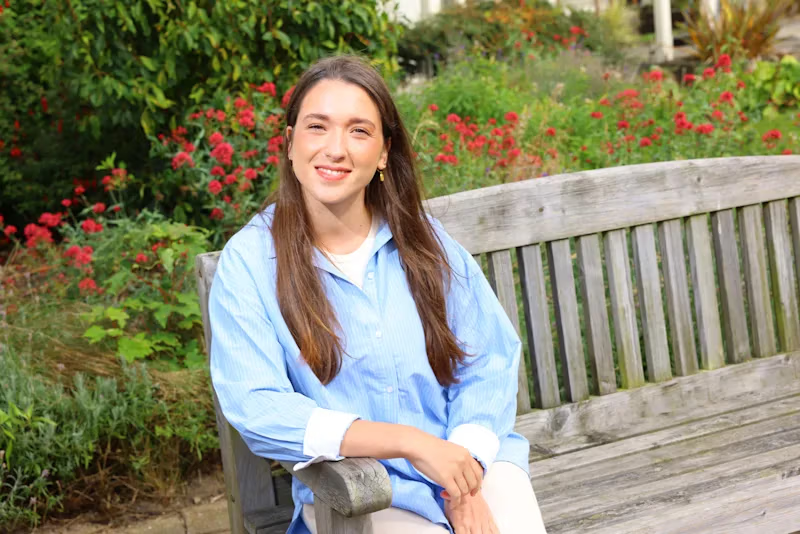
Above: Ms Lopes-Mulhearn, Assistant Head of SENDCo at Dame Allan’s Schools
Written by Ms Lopes-Mulhearn
Ask neurodivergent pupils about revision, and you might get the same response: frustration, exhaustion and, possibly, an inability to know where to start! At Dame Allan’s Schools, we’re listening to our pupils and constantly improving the way we support neurodivergent learners in the run up to their exams
Having worked in both mainstream and special education before joining Dame Allan’s in 2024, I understand the barriers that some young people with special educational needs and disabilities (SEND) face. That’s why we launched our SEND Ambassadors Programme, giving neurodivergent pupils at the Schools a voice in shaping their education. With five ambassadors delivering termly lectures on SEND issues, the programme ensures their voices are heard.
Breaking the cycle of exam anxiety
Neurodivergent pupils may experience differences in their executive function – they may manage their time, organise tasks and regulate their focus in a way that differs from that of neurotypical pupils. This can make it hard to start, plan and follow through with revision strategies.
For some pupils, it’s not just about managing time—it’s about managing their environment. A ticking clock or rustling papers can disrupt concentration. One of our ambassadors told me: “When there are lots of people in a classroom, it can be really hard to focus. That makes it difficult to take in information, and even harder to recall it later.”
Memory recall can be harder for neurodivergent pupils, especially in busy or noisy environments, because their brains process and retrieve information differently. On top of this, sensory overload and the mental effort of processing lots of information can lead to fatigue, making it even more difficult to focus. This is why it is important to be mindful of these challenges when creating revision schedules, making sure they are manageable and allow for breaks to reduce stress and support learning.
Maya, an ambassador who will be sitting her GCSEs this summer, summed it up perfectly. “The way we learn and revise isn’t always the same as our classmates,” she said. And that is why we’ve rethought our entire approach at Dame Allan’s, encouraging pupils to explore different approaches and find what works best for them.
A new way to learn
One effective method is movement-based learning. The brain processes and retains information better when it’s paired with movement, which is why placing learning in specific locations – like revising one topic in one part of a room and another in a different spot – can make a real difference.
Multi-sensory learning is a strategy that has transformed revision for many of our pupils. Pages of black and white text can be overwhelming, so they may choose to introduce colour-coded notes, mind maps, videos and music. Ollie, another of our ambassadors, thrives on visual learning. “I like to watch videos when studying. It helps me remember things better than just reading words on a page,” he told me. Maya, on the other hand, combines written lists with drawings and diagrams to help cement information. There’s no single ‘right’ way—there’s only the way that works for each individual person.
For autistic pupils, storytelling can be particularly powerful. Many are strong logical thinkers, so turning revision into a narrative – whether it’s relating historical events to their own lives or creating fictional characters to navigate scientific concepts -makes learning more meaningful and memorable.
Another key approach is to create structured revision timetables with plenty of breaks and built-in accountability. Many pupils with ADHD struggle with self-regulation, so we sit down with them to create personalised study plans and check in regularly to ensure they stay on track. This extra layer of support can make a real difference in helping them manage their workload.
A supportive environment for every learner
Beyond strategies, we’ve built a supportive environment that starts with the basics – like avoiding stark white paper, which can be challenging for dyslexic pupils, and instead using beige-tinted paper across the Schools. Our library has a dedicated section of dyslexia- friendly books, and we offer regular drop-in sessions for teachers to ensure they are equipped with the tools they need to support the differing needs of neurodivergent learners in the classroom.
We also support pupils with colour vision deficiency (CVD). Led by our school nurse Lynsey Procter, we screen for CVD using the Ishihara test and teachers are trained to adapt classroom materials, ensuring that traditional methods, such as coloured labels and charts, don’t create unnecessary barriers for colour-blind pupils.
The Snug, our wellbeing centre, plays a vital role. It’s a space where pupils can take a break, decompress and access support when needed, which is particularly helpful during exam periods. Neurodivergent pupils often experience fatigue in ways that their neurotypical peers don’t. We don’t object to them needing breaks – we actively encourage it. That’s why we have ‘Snug passes’, allowing pupils to step away for five minutes without explanation or judgment.
Our restorative behaviour management approach, created by neurodivergent pupils themselves, is also key. Rather than punishing missed deadlines or inattentiveness, we investigate the root cause and work with SEND pupils to find solutions and adapt accordingly. It’s about reflection and communication.
Preparing pupils for the future
Our approach to revision and learning isn’t just about passing exams. It’s about equipping pupils with life skills. The world isn’t always ready for neurodivergent people, and that’s the real challenge. We hope to ensure our pupils leave school confident in advocating for themselves, managing their own learning and navigating environments that might not always be designed with them in mind.
At a recent Ambassadors meeting, Maya shared with the group: “I chose Dame Allan’s because of its strong pastoral care, and the learning support has been incredible. Being an Ambassador allows me to contribute to positive changes for pupils like me.”
At Dame Allan’s, we recognise the strengths of neurodivergent pupils, valuing their voices and proving that there’s more than one way to succeed.